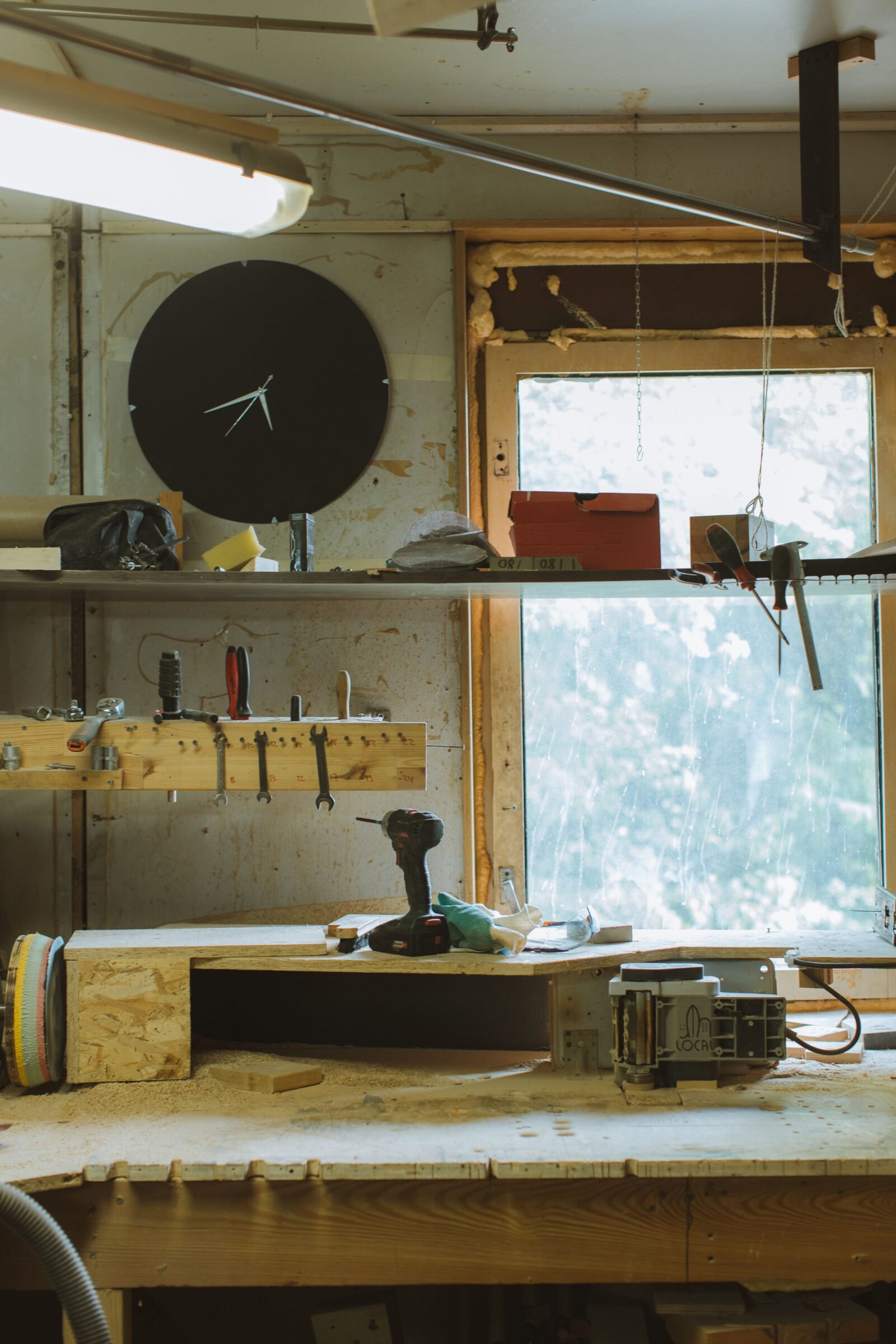

You do not need a spare room or a double garage to have a useful workshop. A corner of a balcony, a section of a utility room, or a fold-away bench in a small apartment can serve you well, if you plan the space with care. The goal is simple: a place where you can work safely, find your tools quickly, and pack away without a fuss.
Start by Deciding What You Will Make
The kind of projects you plan determines the space you need. Assembling furniture and basic repairs call for a modest bench and a few hand tools. Woodworking, painting, or electronics need more specific gear. Write down your three most likely projects, and design around those first. It is easier to expand later than to unload equipment you bought on impulse.
Choose the Right Spot
Look for a place with these qualities:
- Dry conditions. Damp air rusts tools and warps wood.
- Decent light. Natural light helps, but you will likely need extra lighting too.
- Access to power outlets. Avoid running long cords across walkways.
- Ventilation. Essential for sanding, painting, or any work that creates dust or fumes.
- Reasonable noise tolerance. Think about neighbors and family members, and plan work hours accordingly.
If you live in a rented property, check with your landlord before drilling into walls or altering the space.
Think Vertically
When floor space is limited, use the walls. Vertical storage keeps tools within reach and frees up your work surface.
- A pegboard holds hand tools in plain sight, and you can rearrange hooks as your collection changes.
- Wall-mounted rails and magnetic strips keep screwdrivers, chisels, and metal tools organized.
- Shelves above the bench store boxes of screws, glue, and finishing supplies.
- Hooks on the wall or ceiling hold ladders, clamps, and extension cords.
Mount heavy shelves into wall studs or use the correct anchors for your wall type.
Build or Buy a Flexible Workbench
The bench is the heart of any workshop. In a small space, flexibility matters more than size.
- Folding wall-mounted bench. Folds flat against the wall when you finish.
- Workbench with storage underneath. Drawers or shelves below use space that would otherwise be wasted.
- Portable workbench. A folding workbench with a built-in vise can move outside for messy tasks and tuck away afterward.
- Mobile cart. A bench on locking wheels lets you reposition it as projects change.
Whatever you choose, make sure the surface is sturdy, flat, and at a comfortable height. A good rule is that the top should sit around your hip level, so you do not strain your back.
Organize Your Tools by How You Use Them
Put the tools you use most within arm’s reach, and those you use rarely farther away. Group related items together, such as all measuring and marking tools in one tray, or all fasteners in labeled containers. Small clear boxes and drawer organizers make it easy to see what you have.
A simple habit helps more than any storage system: return each tool to its place immediately after use. That one routine keeps a tiny workshop usable.
Plan Your Lighting
Poor lighting causes mistakes and accidents. Good task lighting should be bright, even, and free of harsh shadows. An LED strip or shop light above the bench works well, and a movable lamp helps when you need to see into awkward angles. Position the main light so your own body does not cast a shadow over your work.
Manage Dust and Fumes
In a small space, dust spreads fast. Take simple steps to keep it under control:
- Open windows or use a fan to push air outward when sanding or painting.
- Connect a shop vacuum to sanders and saws where possible.
- Wear a dust mask or respirator suited to the material.
- Cover nearby furniture with sheets, and clean up at the end of every session.
Never use solvents or finishes in a closed room without ventilation.
Prioritize Safety
A small area leaves less room for error, so safety habits matter even more.
- Keep safety glasses, gloves, and hearing protection close to the bench.
- Store sharp tools securely and out of the reach of children.
- Keep a fire extinguisher and a basic first aid kit nearby.
- Do not overload electrical outlets or daisy-chain extension cords.
- Keep walkways clear of cords, offcuts, and tools.
- Store flammable liquids properly, away from heat and in approved containers.
Choose Tools That Work Hard in Small Spaces
Look for tools that do several jobs or store compactly:
- A cordless drill and driver set, which needs no cords and fits on a shelf.
- A compact jigsaw or a handsaw for cutting wood.
- A multi-tool with interchangeable attachments.
- Clamps in a few sizes, which act as extra hands.
- A combination square and tape measure for accurate marking.
Hold off on large stationary machines until you know you need them. If you only need one occasional cut, a hardware store or community workshop may be a better answer than a big tool you must store.
Use Every Inch of Space
A few clever tricks add capacity without adding clutter:
- Install shelves in the space above doors.
- Use the inside of cabinet doors for hanging small tools.
- Slide long items, like boards, into a rack mounted to the ceiling.
- Choose stackable storage boxes with clear labels.
Keep It Clean and Welcoming
A tidy workshop is one you actually want to use. Sweep after each session, wipe down tools, and check for rust or damage regularly. A small radio or a comfortable stool can make the space more pleasant, as long as you do not compromise safety or ventilation.
Frequently Asked Questions
How small can a workshop be?
Even a space of a couple of square meters can work for basic repairs and light projects if it is well organized and uses wall storage.
What is the first thing to buy?
A solid workbench or work surface, plus basic hand tools. Everything else can follow as your projects require.
How do I keep noise down in an apartment?
Work at reasonable hours, use hand tools for quiet tasks, and place a rubber mat under the bench to reduce vibration. Let neighbors know if you plan louder work.
Can I use a balcony as a workshop?
Yes, for many tasks, but keep in mind weather, rules about noise, and any building restrictions. Store tools out of the rain and protect them from rust.
The Takeaway
A good small workshop is a result of planning, not square footage. Choose a dry, well-lit spot, store vertically, pick a flexible bench, and make safety a habit. Start with the essentials and let the space grow with your skills.
This article is general information. Follow local building rules, and consult a qualified electrician for any new wiring or outlets.